
Wikimedia Commons
A New Kind of Leadership
In a moment when Canadians are reckoning with inflation, climate disruption, and rising geopolitical tensions, a new kind of leadership is taking shape. When Mark Carney stepped up to the mic and squared off against American tariffs and populist threats with elbows up, it was more than a show of resolve, it was a signal. This isn’t a rupture with the past decade of Liberal leadership, but a pivot. From symbolic progress to institutional endurance. From the poet to the engineer.
“This isn’t a rupture with the past decade of Liberal leadership, but a pivot. From symbolic progress to institutional endurance. From the poet to the engineer.”
The Trudeau Legacy
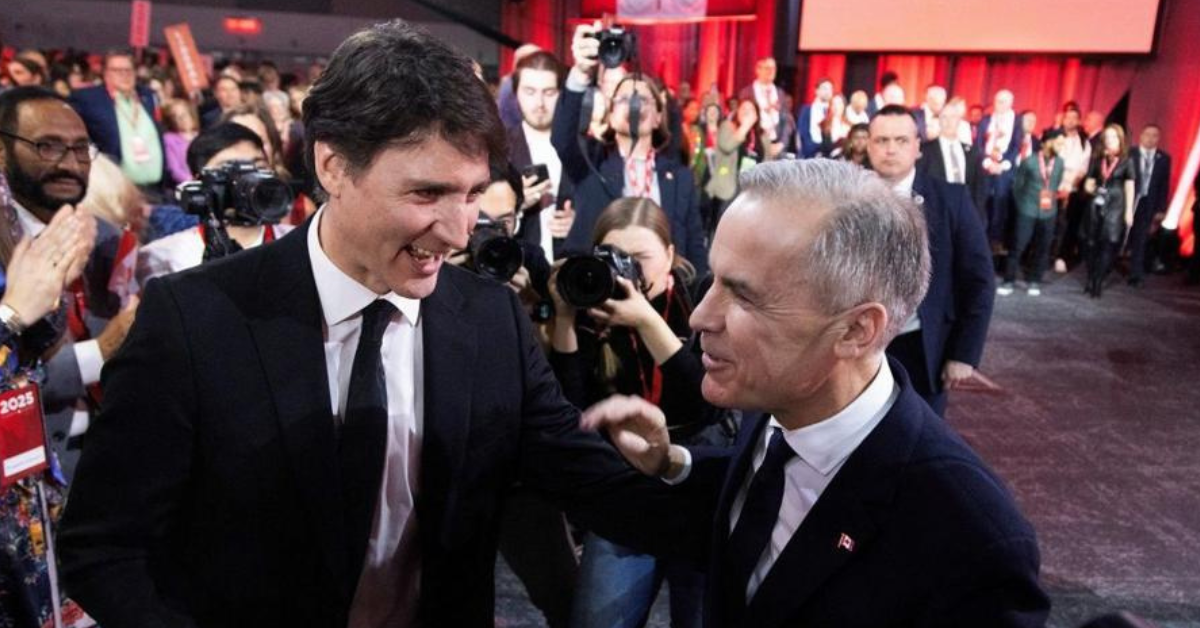
Trudeau, say what you will, brought a lot of overdue conversations to the surface. Reconciliation, feminism, inclusion, he put those words in the national vocabulary and refused to let us go back to pretending they weren’t core to Canadian life. Under his leadership, gender-based budgeting became a framework for federal spending, and national childcare became a central pillar of economic recovery. Out here in Nova Scotia, we know what it means when the centre finally starts listening to the edges. But we also know talk only gets you so far. That’s where Carney comes in.
Carney’s Style: Quiet Competence Over Rhetoric
Carney, despite his Bay Street credentials and Oxford pedigree, rarely speaks in the soaring language of identity politics. In his Reith Lectures, he emphasized that resilient institutions, not individual charisma, are what carry values forward when public attention fades.
Once the poets have stirred the crowd, it’s the engineers who lay down the road.
That might not stir the soul in quite the same way, but once the poets have stirred the crowd, it’s the engineers who lay down the road. A measure of competence and foresight is not unwelcome.
Carney’s Journey
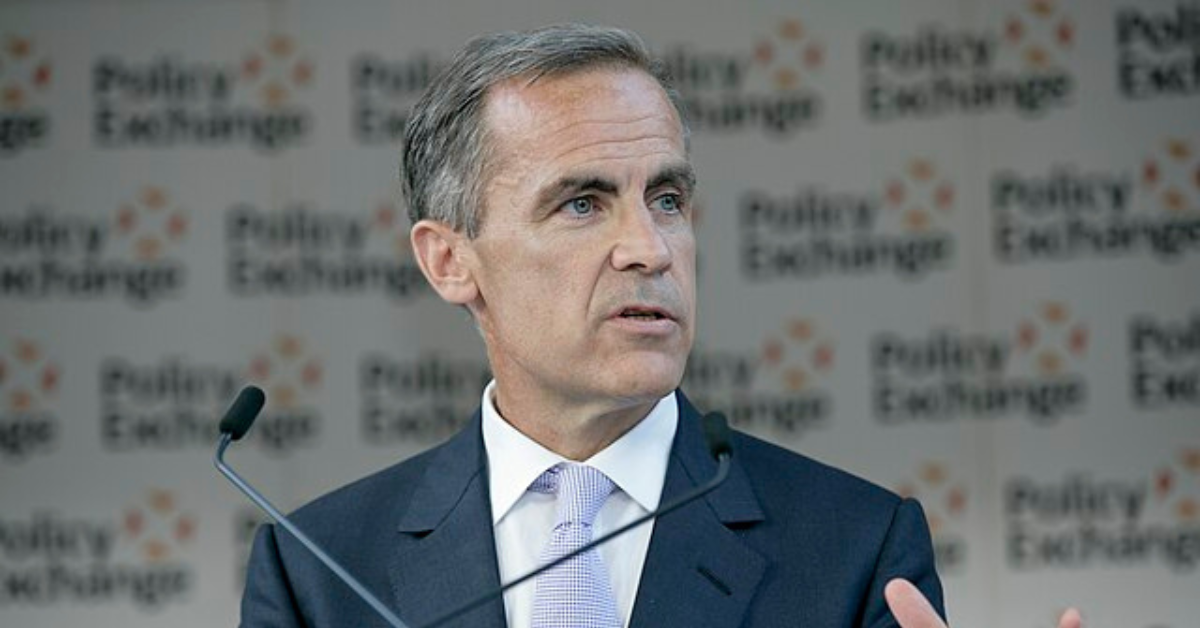
His journey is worth paying attention to. In the 1990s, Carney was writing about how competition drives innovation. Then he went to Goldman Sachs, then to the Bank of Canada, then the Bank of England. By all rights, he should have come out the other side a dyed-in-the-wool fiscal hawk. But somewhere along the way, maybe after the 2008 crash, maybe after watching markets ignore the climate crisis, he changed his tune.
By 2021, Carney was authoring Value(s), a book that argued for a morally grounded capitalism. He made the case that when market logic begins to shape all areas of public and private life, society risks losing sight of deeper values. The distinction between market price and societal value was no longer academic; it had become urgent.
Wikimedia Commons
Carney’s Governance Philosophy
Now, as leader of the Liberal Party, Carney is applying that philosophy to public governance. This isn’t just theoretical, it’s visible in how he talks about Canada’s biggest challenges. He addresses housing as a constraint on productivity, stating in a 2024 op-ed that affordability limits national competitiveness. He frames carbon pricing as a rational market correction. He embeds equity not in slogans, but in budget frameworks and legislative design. As UN Special Envoy on Climate Action, he helped establish international standards for climate risk disclosure, laying groundwork for holding corporations and institutions accountable for their environmental impact.
From Vision to Implementation
To some, this might appear to be a departure from Trudeau’s values-driven leadership. But it is more accurately the next phase in a healthy political cycle, where ambition is followed by architecture, and vision by implementation. Progressivism opens doors; pragmatism ensures they remain open. Both are essential. One cannot endure without the other.
Political theorists have long drawn distinctions between visionary leadership and institutional execution, sometimes described as transformational versus transactional. These dynamics echo what organizational theorist Mary Parker Follett called the necessity of integrating diverse forms of leadership into durable, noncoercive governance.
Carney’s role might also be seen through a Gramscian lens, where a moment of hegemonic transition calls for organic intellectuals, those who not only understand systems, but can reshape them. In this light, Carney does not negate Trudeau’s era but seeks to translate its aspirations into systems that last.
“Progressivism opens doors; pragmatism ensures they remain open. Both are essential. One cannot endure without the other.”
A Warning from South of the Border
American politics serves as a cautionary tale. Governments consumed by undoing the legacy of their predecessors leave little room for continuity or long-term vision. In his “Tragedy of the Horizon” speech, Carney noted how financial markets struggle with risks beyond their short-term outlooks. The same applies to governments obsessed with erasure instead of evolution. Neo-mercantilism, grievance populism, whatever you want to call it, it thrives when people lose faith in public institutions.
The Role of Social Progressives
Canada must not fall into the same reactive pattern. It requires a leadership model that builds upon progress, rather than discarding it. This also means that social progressives have an essential role to play, not in rejecting Carney’s pragmatism, but in ensuring it is continually informed by bold, justice-oriented ideals.
If Carney is to anchor the next phase of Canadian progressivism, it must remain tethered to the voices that pushed the envelope in the first place, those who marched for climate action, organized for racial justice, fought for gender equity, demanded a feminist recovery, and campaigned for reconciliation. Those voices should not fall silent simply because the tone has changed.
Instead, they must continue to shape the agenda, advocate from outside and within, and pull the centre-left to deliver on the promises laid out by the movement’s earlier momentum.
Carney’s leadership must earn the trust of those who see technocracy as too often dismissive of grassroots energy. That trust will be essential if this new phase is to succeed.
As the historian Howard Zinn might have warned, placing too much hope in institutions or individuals risks forgetting that transformative change has always come from the people. And as David Graeber reminded us, the stories we tell about money and responsibility matter just as much as the numbers. Leaders can reinforce the scaffolding, but the moral direction must still rise from below.
Continuity, Not Contradiction
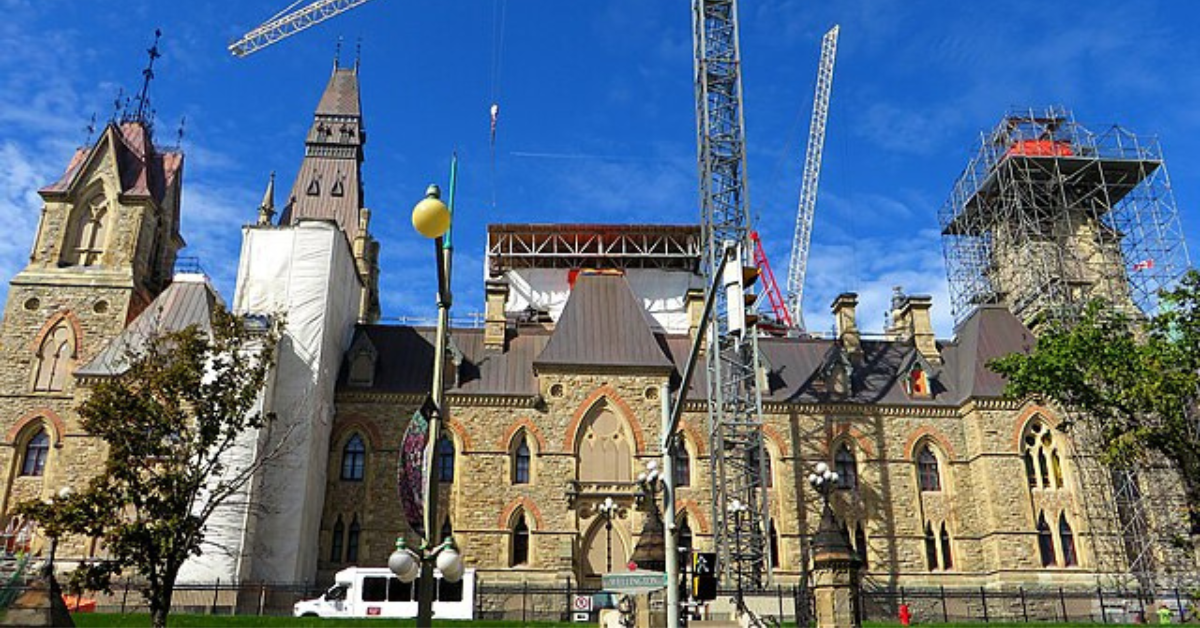
Amid the physical scaffolding surrounding Centre Block in Ottawa, a years-long effort to restore the heart of Canadian democracy, there’s a fitting metaphor for the political moment. Just as our iconic institutions are being reinforced brick by brick, so too must our social and economic foundations be strengthened for the challenges ahead.
Wikimedia Commons
The pairing of Trudeau and Carney offers that rare continuity: where one leads through moral clarity, the other reinforces that clarity through institutional scaffolding. It’s a reminder that poets can call the crowd to action, but engineers build the stage they’ll stand on. But no matter how well-constructed the scaffolding is, the moral direction still comes from people, not institutions. The public, not elites, must remain the compass.
Carney vs. Poilievre
Mark Carney might not be the one to rouse a stadium with rhetoric. But in Value(s), he argues that the resilience of our societies depends on embedding our shared values within the institutions that shape daily life.
His call for pragmatic reform stands in measured contrast to the tax-cut orthodoxy often championed by Pierre Poilievre. Canadian history offers us repeated lessons, whether in the deep cuts of the 1990s or the uneven recovery from the 2008 financial crisis, that austerity tends to fall hardest on those already struggling.
“He sees economic stewardship not as an exercise in accounting, but as an opportunity to strengthen the foundation on which social progress is built.”
Carney’s approach is not flashy, but it reflects an understanding that fiscal discipline and public investment are not mutually exclusive. He sees economic stewardship not as an exercise in accounting, but as an opportunity to strengthen the foundation on which social progress is built.
At a time when slogans threaten to replace solutions, that may be precisely the leadership Canada needs, not in isolation, but in concert with the many voices that helped shape the path we’re on.
We’ve heard the anthem. Now it’s time to lay the foundation.
Further Reading
- Carney, Mark. Value(s): Building a Better World for All. PublicAffairs, 2021.
- Carney, Mark. “Breaking the Tragedy of the Horizon – Climate Change and Financial Stability.” Bank of England, Sept. 2015.
- Carney, Mark. Reith Lectures, BBC Radio 4, Dec. 2020.
- Carney, Mark. Liberal Party Leadership Victory Speech, March 2025.
- Carney, Mark. Campaign Platform on Housing.
- Carney, Mark. UN Special Envoy on Climate Action and Finance, remarks and policy documents.